

Introduction
English is one of the most widely spoken languages in the world. It opens doors to better education, rewarding careers, international travel, and meaningful communication. Yet, many learners can read and understand English well but hesitate when it comes to speaking. They often worry about making mistakes, using incorrect grammar, or not finding the right words during a conversation.
If you have ever wondered how to improve English speaking skills, you are not alone. Millions of learners face the same challenge. The good news is that speaking English is a practical skill that anyone can develop with consistent practice, the right techniques, and a positive mindset. You do not need to sound like a native speaker to communicate effectively. Instead, you need regular English speaking practice, a growing vocabulary, and the confidence to use English in everyday situations.
In this guide, you will discover proven strategies to improve spoken English, build strong English communication skills, overcome common speaking challenges, and create a daily routine that helps you speak English fluently and confidently.
Why Are English Speaking Skills Important?
Speaking English confidently is more than just learning another language. It is a valuable life skill that helps you communicate clearly, build relationships, and succeed in academic and professional environments. Whether you are a student, job seeker, business professional, or traveler, strong speaking skills can create opportunities that might otherwise be difficult to access.
Moreover, improving your spoken English increases your confidence and allows you to express your thoughts naturally. The more you practice, the easier conversations become.
Benefits of Speaking English Fluently
Better Career Opportunities
Many employers prefer candidates who can communicate effectively in English. Strong speaking skills can improve your performance in interviews, meetings, presentations, and workplace discussions. As a result, you become more competitive in the global job market.
Access to Higher Education
Many universities and online learning platforms use English as their primary language of instruction. Speaking English fluently allows you to participate in classroom discussions, group projects, and presentations with greater confidence.
Easier International Travel
English is commonly used in airports, hotels, restaurants, and tourist destinations around the world. Knowing how to communicate in English makes traveling easier and more enjoyable.
Global Communication
English connects people from different countries and cultures. Whether you are networking professionally or making new friends, strong English communication skills help you interact confidently with people worldwide.
Increased Self-Confidence
Perhaps the greatest benefit is confidence. Every successful conversation strengthens your belief in your abilities. Over time, you begin to speak English confidently without constantly worrying about mistakes.
Common Challenges English Learners Face
Many learners struggle with speaking for similar reasons. Understanding these challenges is the first step toward overcoming them.
Fear of Making Mistakes
Many students avoid speaking because they worry about being judged. However, mistakes are a natural part of learning any language.
Grammar Anxiety
Some learners focus so much on perfect grammar that they hesitate before every sentence. This habit slows down conversations and reduces confidence.
Limited Vocabulary
Without enough English vocabulary, it becomes difficult to express ideas clearly. Expanding your vocabulary through daily practice makes conversations much easier.
Pronunciation Problems
Incorrect English pronunciation can make learners feel embarrassed, even when their grammar is correct. Fortunately, pronunciation improves with listening, repetition, and regular speaking practice.
Assess Your Current English Speaking Level
Before you begin improving your speaking skills, it is important to understand your current level. Knowing where you stand helps you choose the right learning methods, set realistic goals, and measure your progress over time.
Remember, every fluent English speaker started as a beginner. Therefore, focus on improvement rather than perfection.
Beginner
If you are a beginner, you can understand a few common words and simple sentences but struggle to form complete responses. You may rely heavily on translation and feel nervous while speaking.
At this stage, focus on basic English speaking, everyday vocabulary, and simple conversations.
Typical Goals
- Learn common greetings and introductions.
- Build basic sentence structures.
- Practice speaking for one to two minutes.
- Improve English pronunciation through repetition.
Intermediate
Intermediate learners can participate in everyday conversations but often pause to think, search for words, or worry about grammar.
Your goal should be to increase fluency in English by speaking more naturally and expanding your vocabulary.
Typical Goals
- Improve conversation flow.
- Use longer sentences.
- Practice English conversation regularly.
- Reduce hesitation while speaking.
Advanced
Advanced learners communicate comfortably but want to sound more natural, professional, and confident.
Focus on improving pronunciation, advanced vocabulary, presentation skills, and speaking accuracy.
Typical Goals
- Develop professional communication.
- Improve public speaking.
- Master natural expressions and idioms.
- Refine pronunciation and speaking style.
Set SMART Speaking Goals
Clear goals make learning more effective. Instead of saying, “I want to speak English better,” create specific and measurable objectives.
For example:
| SMART Goal | Timeline |
| Speak in English for 5 minutes every day. | Daily |
| Learn 10 new English words. | Daily |
| Complete 30 minutes of English listening practice. | Daily |
| Practice speaking with a partner. | Weekly |
| Record and review one speaking exercise. | Weekly |
By setting SMART goals and following them consistently, you will steadily improve spoken English and build lasting confidence. Small daily improvements eventually lead to significant progress.
15 Proven Ways to Improve English Speaking Skills
Improving your spoken English does not require extraordinary talent. Instead, it requires consistent effort, smart learning strategies, and regular practice. While many learners search for shortcuts, fluency comes from using English every day in real-life situations. The following methods will help you build confidence, improve pronunciation, expand your vocabulary, and develop natural communication skills.
1. Speak English Every Day
The most effective answer to how to improve English speaking skills is simple—speak English every day. Even 15 to 30 minutes of daily speaking can make a noticeable difference over time. Like any other skill, speaking improves through regular practice rather than occasional study.
Don’t wait until your grammar is perfect or your vocabulary is extensive. Instead, start speaking with the words you already know. Every conversation strengthens your fluency and helps you think faster in English.
Practical Ways to Practice Daily
- Describe your daily routine in English.
- Talk about your plans for the day.
- Explain what you see around you.
- Answer simple questions aloud.
- Practice introducing yourself.
Consistency matters more than long study sessions. Therefore, make daily English speaking practice a non-negotiable part of your routine.
2. Think in English Instead of Translating
One of the biggest obstacles to fluency is translating every sentence from your native language into English. This habit slows your speaking speed and makes conversations feel stressful.
Instead, train your brain to think directly in English. Begin with simple thoughts and gradually increase the complexity of your sentences.
For example, instead of thinking:
“I need to translate this sentence.”
Think directly:
“I am making tea.”
“The weather is pleasant today.”
“I need to finish my work.”
Daily Mental Exercises
- Describe your surroundings.
- Name objects around your house.
- Think about your daily schedule in English.
- Narrate your activities while cooking or walking.
Over time, this habit helps you speak English confidently without constantly translating.
3. Expand Your Vocabulary Daily
A strong English vocabulary allows you to express your ideas clearly and naturally. However, memorizing hundreds of random words rarely works. Instead, learn vocabulary by topic and use new words immediately in conversations.
For example, focus on one category each day:
- Food
- Travel
- Family
- Office
- Education
- Shopping
- Health
Effective Vocabulary Techniques
- Create digital or paper flashcards.
- Use spaced repetition apps.
- Write example sentences.
- Learn collocations instead of isolated words.
- Review previous vocabulary regularly.
For instance, instead of learning only the word “decision,” also learn:
- Make a decision
- Difficult decision
- Important decision
Using words in context makes them easier to remember during conversations.
4. Improve Your Pronunciation
Good English pronunciation makes your speech easier to understand. Fortunately, you do not need a native accent. Your goal should be clear and natural communication.
Begin by learning sounds that are difficult for you. Additionally, pay attention to stress, rhythm, and intonation because they affect how natural your English sounds.
Ways to Improve Pronunciation
- Listen carefully to native speakers.
- Repeat sentences aloud.
- Practice minimal pairs.
- Learn word stress.
- Focus on sentence rhythm.
Try the shadowing technique.
Shadowing means listening to a sentence and repeating it immediately while copying the speaker’s pronunciation, speed, and intonation.
For example:
Speaker:
“I usually wake up at six o’clock.”
You repeat:
“I usually wake up at six o’clock.”
Practicing this for 10–15 minutes daily significantly improves pronunciation and speaking confidence.
5. Listen to Native English Speakers
Speaking and listening work together. The more English you hear, the more naturally you begin to speak.
Regular English listening practice exposes you to correct pronunciation, everyday vocabulary, and natural sentence structures.
Excellent listening resources include:
- Podcasts
- TED Talks
- Audiobooks
- BBC Learning English
- YouTube educational channels
When listening:
- Focus on pronunciation.
- Notice common expressions.
- Repeat useful phrases.
- Pause and imitate speakers.
Initially, choose slower audio. As your confidence grows, gradually move to natural-speed conversations.
6. Read English Aloud
Reading silently improves comprehension, but reading aloud improves speaking.
When you read aloud, you practice pronunciation, sentence rhythm, and fluency simultaneously. Moreover, you become more comfortable producing English sounds.
Suitable reading materials include:
- News articles
- Short stories
- Children’s books
- Blog posts
- Course materials
Reading Practice Tips
- Read slowly at first.
- Focus on clarity rather than speed.
- Record yourself occasionally.
- Repeat difficult paragraphs.
Reading aloud also reinforces English grammar for speaking because you repeatedly hear correct sentence patterns.
7. Practice Speaking with a Partner
Conversation is essential if you want to develop real English communication skills. Speaking with another person teaches you how to respond naturally instead of memorizing sentences.
You can practice with:
- Friends
- Family members
- Language exchange partners
- Online tutors
- Speaking clubs
Conversation Ideas
- Introduce yourself.
- Discuss your hobbies.
- Talk about your weekend.
- Describe your hometown.
- Share your future goals.
During English conversation practice, avoid worrying about perfection. Instead, focus on expressing your ideas clearly.
If your partner corrects your mistakes politely, treat every correction as an opportunity to improve.
8. Record Your Voice
Recording yourself is one of the fastest ways to identify your strengths and weaknesses. Although many learners feel uncomfortable at first, this exercise builds self-awareness and confidence.
Choose a simple topic, such as
- My daily routine
- My family
- My favorite book
- My job
- My hobbies
Speak continuously for two to five minutes, then listen carefully.
Pay attention to:
- Pronunciation
- Speaking speed
- Grammar
- Vocabulary usage
- Long pauses
- Repeated words
Record yourself every week and compare older recordings with newer ones. You will clearly notice improvements in fluency in English, pronunciation, and confidence over time.
Image Suggestion: Infographic showing a learner practicing vocabulary, pronunciation, listening, reading aloud, partner conversations, and voice recording as part of a daily English speaking routine
9. Learn Common English Phrases
Learning complete phrases is more effective than memorizing individual words. Native speakers often use common expressions in everyday conversations, and knowing these phrases helps you respond naturally and confidently.
Instead of translating every sentence, learn ready-to-use expressions for common situations. As a result, you will speak more smoothly and hesitate less during conversations.
Useful Everyday Phrases
Daily Conversations
- How are you doing?
- Nice to meet you.
- Could you help me?
- That’s a great idea.
- I understand what you mean.
Workplace English
- I’ll get back to you.
- Let’s discuss this later.
- Could you explain that again?
- Thank you for your feedback.
Travel English
- Where is the nearest station?
- I’d like to book a room.
- Could you recommend a restaurant?
- How much does this cost?
Practice using these phrases during your English conversation practice to make your speech sound more natural.
10. Improve Your Grammar Naturally
Many learners believe they must master every grammar rule before speaking. However, this approach often delays progress. Grammar is important, but communication should always come first.
Instead of memorizing complicated rules, focus on learning sentence patterns that you can use in daily conversations. This method improves your English grammar for speaking without making learning overwhelming.
Focus on Common Patterns
For example:
- I like…
- I want to…
- I need…
- I am going to…
- Can you…?
Practice these patterns with different vocabulary.
Examples:
- I like reading books.
- I like playing football.
- I like learning English.
Repeating useful sentence structures helps you speak faster and more accurately.
11. Watch English Movies with Subtitles
Watching English movies, TV shows, and documentaries is an enjoyable way to improve your speaking skills. It exposes you to natural conversations, pronunciation, and everyday vocabulary.
Start with English subtitles instead of subtitles in your native language. This allows you to connect spoken words with written text more effectively.
Make Movie Watching Productive
- Pause and repeat interesting dialogues.
- Write down new expressions.
- Practice shadowing your favorite scenes.
- Listen to how emotions change pronunciation.
Choose movies or shows with clear pronunciation, especially if you are still developing your English listening practice.
12. Join Online English Speaking Classes
Although self-study is valuable, joining an English speaking course provides structured learning and regular speaking opportunities. Live classes allow you to practice with experienced trainers and receive immediate feedback.
A good course combines grammar, vocabulary, pronunciation, and conversation practice systematically.
Benefits of Online English Speaking Classes
- Live interactive sessions
- Personalized feedback
- Guided English speaking exercises
- Pronunciation correction
- Regular conversation practice
- Confidence-building activities
Many quality courses also include role plays, group discussions, listening activities, and practical assignments to strengthen English communication skills.
13. Practice Mirror Speaking
Mirror speaking is one of the easiest ways to practice alone. Simply stand in front of a mirror and speak as if you are talking to another person.
This exercise improves eye contact, body language, facial expressions, and speaking confidence.
Topics to Practice
- Introduce yourself.
- Describe your daily routine.
- Talk about your family.
- Explain your hobbies.
- Share your future goals.
- Tell a short story.
If you practice mirror speaking for 10 to 15 minutes every day, you will gradually develop confidence in speaking English.
14. Stop Being Afraid of Mistakes
Fear is one of the biggest barriers to fluency. Many learners avoid speaking because they worry about making errors. Ironically, avoiding conversations slows improvement.
Remember that every fluent speaker has made countless mistakes while learning.
Change Your Mindset
Instead of thinking:
“What if I make a mistake?”
Think:
“Every conversation helps me improve.”
Whenever someone corrects your pronunciation or grammar, thank them and continue speaking. Each correction brings you one step closer to fluency.
Building confidence is a gradual process. Therefore, celebrate small achievements, such as completing a conversation or learning new expressions.
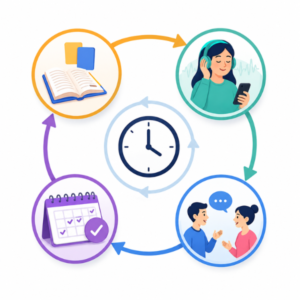
15. Follow a Daily Speaking Routine
Consistency produces better results than studying for several hours once a week. A simple daily routine keeps your learning organized and helps you improve steadily.
Below is an example of an effective speaking schedule.
Morning
- Learn 10 new vocabulary words.
- Review yesterday’s lessons.
- Read one short article aloud.
Afternoon
- Complete English listening practice using a podcast or YouTube video.
- Repeat useful phrases.
- Practice pronunciation.
Evening
- Have a conversation with a friend or tutor.
- Practice mirror speaking.
- Record yourself speaking for five minutes.
Weekly Review
- Revise vocabulary.
- Review pronunciation mistakes.
- Assess your speaking progress.
- Set new goals for the coming week.
Following a consistent routine will help you improve spoken English, build fluency, and speak English confidently over time.
Daily Practice Plan to Improve English Speaking
A structured schedule makes learning more effective. Instead of practicing randomly, dedicate specific time slots to different language skills. Even one hour of focused practice each day can produce excellent results over several months.
The following plan is suitable for beginners as well as intermediate learners.
| Time | Activity | Duration |
| Morning | Learn new English vocabulary and review previous words. | 15 minutes |
| Afternoon | English listening practice with podcasts, YouTube, or audiobooks | 20 minutes |
| Evening | English speaking practice, mirror speaking, or conversation with a partner | 30 minutes |
| Night | Review mistakes, revise vocabulary, and set goals for the next day. | 10 minutes |
Additionally, spend one day each week reviewing your progress. Listen to your voice recordings, evaluate your pronunciation, and identify areas that need improvement. Consistent review helps you stay motivated and ensures steady progress.
Best Resources to Improve English Speaking Skills
Using the right learning resources can accelerate your progress. While daily practice is essential, quality tools make learning more engaging and effective.
Mobile Apps
Several mobile apps provide interactive lessons and speaking practice.
- Duolingo – Builds vocabulary and grammar through short lessons.
- ELSA Speak – Focuses on pronunciation using AI-powered feedback.
- BBC Learning English – Offers lessons, videos, vocabulary, and listening practice.
- HelloTalk – Connects learners with native speakers for language exchange.
Use these apps consistently to strengthen your basic English speaking and improve fluency.
YouTube Channels
Educational YouTube channels offer free lessons on pronunciation, grammar, vocabulary, and conversation skills.
Look for channels that include:
- Speaking exercises
- Real-life conversations
- Pronunciation drills
- Listening activities
- Vocabulary lessons
Watching just 15–20 minutes daily can significantly improve your listening and speaking abilities.
Podcasts
Podcasts are excellent for improving listening comprehension and natural pronunciation. They also expose you to authentic conversations and everyday expressions.
Choose podcasts that match your current English level and listen regularly while commuting, walking, or exercising.
English Books
Reading books strengthens vocabulary, grammar, and sentence structure. Beginners can start with graded readers or children’s books, while advanced learners may enjoy novels, biographies, and non-fiction.
Reading aloud also supports better pronunciation and speaking fluency.
Online English Speaking Courses
A structured English speaking course combines live interaction, guided practice, pronunciation correction, and expert feedback. Many courses also include role plays, vocabulary-building activities, and conversation sessions that help learners apply English in real-life situations. Choosing a course with experienced trainers and practical speaking exercises can accelerate your progress and boost your confidence.
Image Suggestion: Learning resources collage featuring a smartphone with language apps, books, headphones, a laptop for online classes, and a microphone.
Common Mistakes That Slow Down English Speaking Improvement
Many learners spend months studying English but make little progress because of avoidable mistakes. Recognizing these habits allows you to correct them early and learn more efficiently.
Memorizing Instead of Speaking
Learning vocabulary is helpful, but memorizing word lists without using them in conversations limits your progress. Practice speaking with every new word you learn.
Fear of Grammar
Trying to produce perfect grammar in every sentence often causes hesitation. Focus on communicating your ideas clearly, then improve accuracy through regular practice.
Lack of Daily Practice
Speaking once or twice a week is rarely enough to build fluency. Short daily practice sessions produce much better long-term results.
Speaking Too Fast
Many learners believe speaking quickly makes them sound fluent. In reality, speaking clearly and naturally is far more important. Slow down, pronounce words correctly, and focus on clarity.
Avoiding Conversations
Reading and listening alone cannot develop speaking skills. Participate in conversations whenever possible, even if you make mistakes.
Giving Up Too Early
Fluency takes time. Some learners stop practicing after a few weeks because they expect immediate results. Stay patient, remain consistent, and celebrate small improvements. Every conversation brings you closer to speaking English with confidence.
How Long Does It Take to Improve English Speaking Skills?
There is no single timeline for becoming fluent because every learner progresses at a different pace. Your improvement depends on several factors, including your current level, the amount of daily practice, your learning methods, and your willingness to speak regularly.
If you practice consistently and focus on real communication instead of memorization, you will notice steady progress. Speaking English is a skill that develops through continuous use, so small daily improvements add up over time.
Factors That Affect Your Progress
Starting Level
Beginners usually need more time to build vocabulary, pronunciation, and confidence. Intermediate learners often improve faster because they already have a foundation.
Practice Frequency
Daily practice produces better results than studying only once or twice a week. Even 30 minutes of focused daily English speaking practice can make a significant difference.
Speaking Opportunities
The more conversations you have, the faster your fluency improves. Practice with friends, tutors, classmates, or language exchange partners whenever possible.
Learning Methods
Combining speaking, listening, reading, and vocabulary practice creates balanced language development. Following a structured study plan also helps you progress more efficiently.
Motivation and Consistency
Motivation helps you get started, but consistency keeps you improving. Set realistic goals, track your progress, and celebrate small achievements along the way.
Estimated Progress Based on Daily Practice
| Daily Practice Time | Expected Progress |
| 15 minutes | Slow but steady improvement |
| 30 minutes | Moderate improvement with noticeable confidence |
| 60 minutes | Fast improvement in fluency and pronunciation |
| 90+ minutes | Significant progress with regular conversation practice |
Remember, quality matters as much as quantity. Focused speaking practice is far more effective than passive learning.
How an English Speaking Course Can Help
Although self-study can improve your communication skills, a structured English speaking course provides guidance, accountability, and expert support that can accelerate your progress.
A well-designed course follows a step-by-step curriculum, allowing learners to build confidence gradually while improving vocabulary, grammar, pronunciation, and conversation skills. Live practice sessions also provide valuable opportunities to use English in realistic situations.
A comprehensive English speaking course typically includes:
- A structured curriculum for beginners and advanced learners
- Live interactive speaking sessions
- Personalized feedback from experienced trainers
- Pronunciation correction and fluency coaching
- Practical English speaking exercises
- Role plays and real-life conversations
- Vocabulary-building activities
- Confidence-building presentations and discussions
- Regular assessments to monitor progress
- Flexible class schedules and learning support
Courses that combine conversation practice with practical communication activities help learners develop lasting English communication skills rather than simply memorizing grammar rules. Regular speaking opportunities, personalized guidance, and continuous feedback make it easier to overcome hesitation and speak English confidently.
Book a Free Demo Class
Ready to improve your English with expert guidance?
Join our live English Speaking Course and learn through interactive lessons, daily speaking practice, pronunciation training, and personalized feedback. Whether you are a student, working professional, homemaker, or job seeker, our course is designed to help you communicate with confidence.
Book your FREE demo class today and take the first step toward speaking English fluently.
Conclusion
Learning how to improve English speaking skills is not about finding a secret shortcut—it is about building consistent habits that strengthen your confidence and communication every day. By speaking regularly, expanding your vocabulary, improving your pronunciation, practicing conversations, and following a structured routine, you can make steady progress toward fluency.
Remember that mistakes are a natural part of learning. Every conversation, every new word, and every speaking exercise brings you closer to your goal. Stay patient, practice daily, and challenge yourself to use English whenever possible.
If you want faster results, consider joining a structured English speaking course where experienced trainers provide live practice, personalized feedback, and continuous motivation.
Start your journey today, follow your daily practice plan, and you’ll soon speak English confidently in both personal and professional situations.