

Reading the Quran is one of the most rewarding acts of worship in Islam. However, learning to recite it correctly requires more than simply recognizing Arabic words. Every letter has a specific pronunciation, and every verse deserves to be read as it was revealed. That is why understanding how to learn Quran with Tajweed at home is essential for anyone who wants to improve their Quran recitation.
Fortunately, modern technology has made home Quran learning easier than ever. Whether you are a beginner, a parent looking for Quran learning for kids, or an adult returning to your Quran studies, you can now access qualified teachers, online Quran classes, and interactive learning resources from anywhere in the world.
In this guide, you will learn what Tajweed is, why it matters, and how to build a practical learning routine at home. You will also discover the importance of Noorani Qaida, Makharij, Arabic pronunciation, and basic Tajweed rules that help you read the Quran with confidence and accuracy.
What Is Tajweed, and Why Is It Important?
Learning the Quran begins with reading every letter correctly. Tajweed is the science that teaches Muslims how to pronounce the words of the Quran exactly as they were revealed to Prophet Muhammad ﷺ. Without Tajweed, even small pronunciation mistakes can change the meaning of words.
Whether you want to learn Quran with Tajweed, join a Quran reading course, or improve your daily recitation, understanding Tajweed is the first step toward accurate and beautiful Quran reading.
Meaning of Tajweed
The word “Tajweed” comes from the Arabic root Jawwada (جود), which means “to improve” or “to make better.”
Linguistic Meaning
Linguistically, “Tajweed” refers to improving or beautifying something. When applied to Quran recitation, it means reading the Quran in the best possible manner.
Technical Meaning
Technically, Tajweed is the set of rules that governs the correct pronunciation of every Arabic letter. It includes:
- Correct articulation points (Makharij)
- Letter characteristics
- Proper lengthening (Madd)
- Nasal sounds (Ghunnah)
- Rules of stopping and starting
- Correct joining of letters
These rules ensure that every verse is recited accurately while preserving its original pronunciation.
Why Every Muslim Should Learn Tajweed
Correct Pronunciation |
The Quran was revealed in Arabic, and each letter has a unique sound. Learning Tajweed helps you pronounce every letter correctly using the proper Arabic pronunciation and articulation points. |
Preserving the Words of Allah |
Incorrect pronunciation can sometimes alter the meaning of Quranic words. Tajweed protects the original wording by ensuring every letter is pronounced exactly as intended. |
Beautifying Quran Recitation |
The Prophet Muhammad ﷺ encouraged Muslims to beautify their recitation. Tajweed adds clarity, rhythm, and fluency, making the Quran more pleasant to read and listen to. |
Avoiding Common Mistakes |
Many beginners confuse similar Arabic letters or skip important pronunciation rules. Studying Tajweed helps eliminate these mistakes before they become habits. |
Benefits of Reading the Quran with Tajweed
Learning Tajweed offers both spiritual and practical benefits.
Some of the most important advantages include:
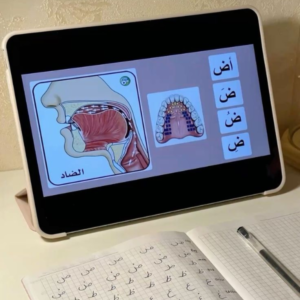
- Improved Quran pronunciation
- Greater confidence during recitation
- Better understanding of Quranic words
- Increased fluency through regular practice
- Stronger connection with the Quran
- Easier memorization of verses
- More accurate recitation during Salah
Additionally, Tajweed encourages discipline and consistency. As your recitation improves, you become more motivated to continue learning and revising the Quran regularly.
Can You Learn Quran with Tajweed at Home?
The simple answer is yes. Today, thousands of students around the world successfully learn Tajweed at home through structured online programs and qualified instructors. Advances in technology have made Quran education more accessible than ever before.
Instead of traveling to a madrasa, learners can now join Quran classes online from the comfort of their homes. Live video sessions allow students to interact directly with experienced teachers, receive instant corrections, and practice recitation in real time.
In addition to live lessons, several digital resources support your learning journey. These include:
- Interactive online Quran classes
- Digital Mushaf applications
- Recorded Tajweed lessons
- Quran learning platforms
- Mobile apps for revision
- Audio recitations by renowned Qaris
Although these resources are valuable, they work best when combined with guidance from a qualified Quran tutor. A teacher can identify mistakes that self-study often misses and provide personalized feedback to improve your recitation.
Advantages of Home Learning
Learning from home offers several practical benefits for both children and adults.
- Flexible class schedules
- Study at your own pace
- Comfortable learning environment
- Affordable compared to many traditional options
- One-to-one attention from teachers
- Easy access regardless of location
- Suitable for Quran learning for adults and Quran learning for kids
Home Learning vs. Traditional Madrasa
| Home Learning | Traditional Madrasa |
| Flexible schedule | Fixed timings |
| Online Quran tutor | Physical classroom |
| Personalized lessons | Group learning |
| Learn from anywhere. | Location dependent |
| Recorded classes available | Usually no recordings |
| Easier progress tracking | Limited individual feedback |
For many learners, home-based study combines convenience with quality instruction. When supported by a qualified teacher and consistent practice, it becomes one of the most effective ways to learn Quran online.
Step-by-Step Guide to Learning Quran with Tajweed at Home
Learning the Quran with Tajweed is a gradual process. Rather than trying to master everything at once, follow a structured approach that builds your skills step by step.
Step 1 – Make a Sincere Intention (Niyyah)
Every act of worship begins with a sincere intention. Before starting your Quran journey, remind yourself that your goal is to seek the pleasure of Allah and improve your relationship with His Book.
A sincere intention helps you remain patient when learning becomes challenging. Instead of focusing only on finishing lessons quickly, aim for consistent improvement.
Create a realistic study routine, even if you can dedicate only 20 to 30 minutes each day. Small, regular efforts lead to lasting progress.
Step 2 – Learn the Arabic Alphabet
Before reading the Quran fluently, you must recognize every Arabic letter and understand how it sounds in different positions within a word.
Most beginners start with Noorani Qaida, one of the most trusted books for learning Quran reading. It introduces:
- Arabic letters
- Letter shapes
- Short vowels
- Long vowels
- Joining letters
- Basic reading practice
A strong foundation in Noorani Qaida makes later Tajweed lessons much easier and reduces pronunciation errors.
Step 3 – Master the Makharij (Points of Articulation)
One of the most important parts of Tajweed is learning the Makharij, or the points from which Arabic letters are pronounced.
Some letters originate from the throat, while others come from the tongue, lips, or nasal passage. Even letters that look similar often have completely different articulation points.
Beginners commonly confuse letters such as
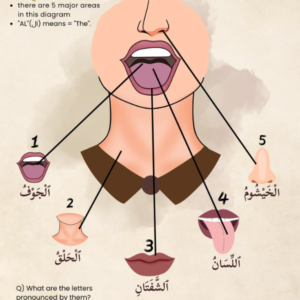
- س and ص
- ذ and ز
- ح and ه
- ق and ك
Practicing each sound with a qualified teacher helps develop accurate pronunciation from the beginning.
Step 4 – Learn Basic Tajweed Rules
After mastering the alphabet and pronunciation, begin studying the basic Tajweed rules. These rules help you read the Quran naturally and correctly.
Start with:
- Noon Sakinah and Tanween rules
- Meem Sakinah
- Ghunnah (nasal sound)
- Madd (lengthening)
- Qalqalah (echoing letters)
- Heavy and light letters
Do not rush through these concepts. Instead, practice each rule while reading short Quranic verses so that you understand both the theory and its practical application.
Step 5 – Practice Daily
Consistency is the key to mastering Quran recitation. Even if you study for only 20 to 30 minutes a day, regular practice produces better results than long, irregular sessions. Daily reading helps reinforce Tajweed rules, improves fluency, and strengthens your memory.
Create a simple routine that includes revision, learning a new Tajweed rule, and reading a few verses of the Quran. Reading aloud is especially important because it allows you to hear your pronunciation and identify mistakes.
To make your practice more effective:
- Read slowly and clearly.
- Focus on one Tajweed rule at a time.
- Repeat difficult words several times.
- Revise previously learned lessons before moving forward.
- Keep a notebook to record mistakes and corrections.
Over time, these small daily efforts will significantly improve your Quran recitation and build confidence.
Step 6 – Listen to Qualified Quran Reciters (Qaris)
Listening to expert Quran reciters is one of the easiest ways to improve pronunciation and rhythm. By hearing correct recitation repeatedly, you naturally develop better articulation, fluency, and understanding of Tajweed.
Some well-known Qaris include
When listening, avoid treating the recitation as background audio. Instead, open the holy Quran (Mushaf) and follow each verse carefully. Pause after every few verses and repeat them aloud while imitating the pronunciation and rhythm.
Listening practice helps you:
- Improve Arabic pronunciation
- Recognize proper Makharij
- Understand Madd and Ghunnah naturally
- Build confidence in recitation
Step 7 – Learn with a Qualified Teacher
Although books, videos, and apps are useful, they cannot replace a qualified Quran tutor. Tajweed is a practical skill that requires correction from someone who understands proper Quran recitation.
A teacher can:
- Correct pronunciation mistakes immediately.
- Explain difficult Tajweed concepts.
- Monitor your progress.
- Motivate you to remain consistent.
- Provide personalized lessons based on your level.
Many students today join online Quran classes because they offer one-to-one attention, flexible schedules, and experienced teachers. These classes are suitable for both Quran learning for adults and Quran learning for kids.
Step 8 – Revise Regularly
Revision is just as important as learning new lessons. Without regular revision, many learners forget previously learned Tajweed rules or repeat the same pronunciation mistakes.
Set aside one day each week to revise everything you have studied.
You can also:
- Record your own recitation.
- Compare it with your teacher’s recitation.
- Note recurring mistakes.
- Repeat difficult verses until they become easy.
Regular revision strengthens your memory and helps you apply Tajweed naturally while reading the Quran.
Essential Tajweed Rules Every Beginner Should Know
Every beginner should understand a few fundamental Tajweed rules before moving on to advanced concepts. These rules form the foundation of correct Quran recitation.
| Makharij | Makharij are the articulation points of Arabic letters. Every letter originates from a specific place in the mouth or throat. Learning these points ensures correct pronunciation and prevents common mistakes. |
|---|---|
| Sifaat | Sifaat are the characteristics of letters, such as softness, strength, heaviness, and lightness. Understanding these qualities helps distinguish similar Arabic letters. |
| Madd | Madd means lengthening certain vowel sounds. Different types of Madd require different lengths of recitation. Reading them correctly improves the beauty and accuracy of Quran recitation. |
| Ghunnah | Ghunnah is the nasal sound produced during the pronunciation of specific letters, especially Noon and Meem. Proper Ghunnah gives recitation a smooth and natural flow. |
| Ikhfa | Ikhfa means hiding the sound of Noon Sakinah or Tanween before certain letters while maintaining a gentle nasal sound. |
| Idgham | “Idgham” means merging one letter into another under specific conditions, allowing the recitation to flow smoothly. |
| Iqlab | Iqlab changes Noon Sakinah or Tanween into a Meem sound before the letter Ba while maintaining Ghunnah. |
| Izhar | Izhar means pronouncing Noon Sakinah or Tanween clearly without merging or hiding the sound. |
| Qalqalah | Qalqalah produces a slight echo when certain letters carry Sukoon. This rule adds clarity and prevents incorrect pronunciation. |
| Waqf Rules | “Waqf” refers to stopping correctly during Quran recitation. Proper stopping preserves the meaning of verses and improves fluency. |
Essential Tajweed Rules Table
| Tajweed Rule | Purpose | Difficulty |
| Madd | Lengthening sounds | Easy |
| Ghunnah | Nasal pronunciation | Easy |
| Ikhfa | Hidden pronunciation | Medium |
| Idgham | Merging letters | Medium |
| Qalqalah | Echo sound | Easy |
Common Mistakes Beginners Make While Learning Tajweed
Many learners unintentionally develop habits that slow their progress. Recognizing these mistakes early helps improve recitation more quickly.
Common mistakes include:
- Learning without guidance from a qualified teacher.
- Ignoring Makharij and focusing only on reading speed.
- Reading too quickly without applying Tajweed.
- Practicing inconsistently.
- Memorizing verses before mastering pronunciation.
- Skipping Noorani Qaida.
- Failing to revise previous lessons.
Remember that quality is more important than speed. Slow, accurate recitation with proper Tajweed is far better than rushing through verses with repeated mistakes.
Daily Study Plan to Learn Quran with Tajweed at Home
Following a structured routine makes learning easier and more consistent.
| Time | Activity |
| 10 minutes | Revise the previous lesson. |
| 15 minutes | Learn one Tajweed rule. |
| 20 minutes | Quran reading practice |
| 10 minutes | Listen to a qualified Quran reciter (Qari). |
| 5 minutes | Self-assessment and corrections |
Even a one-hour daily schedule can produce noticeable improvement when followed consistently.
Best Resources to Learn Quran with Tajweed at Home
Choosing the right learning resources can make your Quran journey more effective.
| Noorani Qaida | It is one of the best starting points for beginners. It teaches Arabic letters, pronunciation, joining letters, and basic reading skills before moving to Quran recitation. |
| Online Quran Classes | Online interactive Quran classes provide live instruction, real-time correction, and structured lessons. They are ideal for learners who want personalized guidance. |
| Tajweed Books | Printed Tajweed books explain pronunciation rules with examples. They are useful for revision but work best alongside teacher guidance. |
| Mobile Apps | Many apps help learners revise Tajweed rules, practice pronunciation, and track daily progress. However, they should complement—not replace—a qualified teacher. |
| YouTube Lessons | Free video lessons introduce beginners to Tajweed concepts and pronunciation. While informative, they cannot provide personalized feedback. |
| Quran Websites | Educational Quran websites offer articles, audio recitations, downloadable resources, and practice materials. These platforms are excellent for additional learning but should be combined with live instruction for the best results. |
Why Learning with an Online Quran Teacher Is More Effective
Self-study is valuable, but learning from an experienced teacher accelerates your progress. A qualified teacher listens to your recitation, corrects mistakes immediately, and guides you through each stage of learning.
Benefits include:
- Live pronunciation correction
- Structured learning path
- Personalized lesson plans
- Progress tracking
- Flexible scheduling
- One-to-one attention
- Suitable for children and adults
- Increased motivation and accountability
With professional guidance, learners develop confidence and master Quran pronunciation much faster than through independent study alone.
📖 Book a Free Trial Quran Class
Start your Quran learning journey with certified Tajweed tutors. Receive personalized guidance, improve your pronunciation, and learn at your own pace through interactive online lessons.
Conclusion
Learning the Quran with Tajweed at home is achievable for anyone who approaches the journey with sincerity, patience, and consistency. Begin with Noorani Qaida, focus on Arabic pronunciation and Makharij, and gradually master the basic Tajweed rules through daily practice. While books, apps, and videos are valuable resources, guidance from a qualified Quran tutor ensures accurate recitation and continuous improvement. By building a regular study routine and seeking expert feedback, both children and adults can develop confidence in reading the Quran beautifully and correctly.
Start your Quran journey today. Book a free trial class with certified Tajweed tutors and experience structured, personalized online Quran lessons.
Frequently Asked Questions
How can I learn the Quran by myself?
Start with Noorani Qaida, learn basic Tajweed, practice daily, and listen to qualified Quran reciters.
How to start learning to read the Quran?
Learn the Arabic alphabet, vowel signs, and basic pronunciation before reading short surahs.
What are the 5 surahs to recite daily?
There is no authentic list of five daily surahs. Many Muslims regularly recite Al-Ikhlas, Al-Falaq, An-Nas, Al-Mulk, and Al-Kahf (on Fridays).
Which dua to read 7 times?
Recite “As’alullāhal-‘Aẓīma Rabbal-‘Arshil-‘Aẓīmi an yashfiyaka” seven times for someone who is ill.
Is it okay to read the Quran on a phone?
Yes. Reading the Quran on a phone or tablet is permissible and widely practiced.
How to memorize a surah in 5 minutes?
Repeat each verse several times, understand its meaning, and revise immediately after memorizing.
What are the 7 rules of Tajweed?
The main areas are Makharij, Sifaat, Noon Sakinah & Tanween, Meem Sakinah, Madd, Qalqalah, and Waqf & Ibtida.
Which app is best for learning Quran with Tajweed?
Many reliable apps are available for Quran reading and Tajweed practice. Choose one that includes audio recitation, progress tracking, and qualified instructional content.
Can children learn Quran with Tajweed at home?
Yes. With supportive parents, a structured routine, and experienced online teachers, children can successfully learn Quran recitation from home.